If you are living with type 1 or type 2 diabetes, you will probably already know that managing blood glucose levels is central to your care. But blood pressure matters just as much. High blood pressure, or hypertension, is one of the most common complications associated with diabetes, and one of the most important factors driving the risk of serious outcomes like heart disease, stroke, and kidney disease.
The good news is that diet is one of the most effective tools for managing blood pressure. And when it comes to diet, the amount of salt we eat is one of the biggest levers we have.
Contents
Why blood pressure matters in diabetes
How much salt should we be eating?
The evidence: Salt reduction and blood pressure
Where does salt come from in our diet?
Practical tips for reducing salt
Salt and diabetes medications
Beyond salt: Other dietary factors that affect blood pressure
Salt, blood pressure and diabetes: Key takeaways
References
Why blood pressure matters in diabetes
People living with diabetes are at significantly higher risk of cardiovascular disease than the general population. Adults with diabetes are around twice as likely to develop heart disease or have a stroke compared with people without diabetes, and this applies to both type 1 and type 2. The risk is particularly elevated in type 1 diabetes in those who have had the condition for many years or who have developed kidney complications.
High blood pressure accelerates damage to blood vessels throughout the body. Over time, this increases the risk of:
- Heart attack and stroke
- Diabetic kidney disease (nephropathy)
- Diabetic eye disease (retinopathy)
- Peripheral arterial disease
Blood pressure targets in diabetes (NICE)
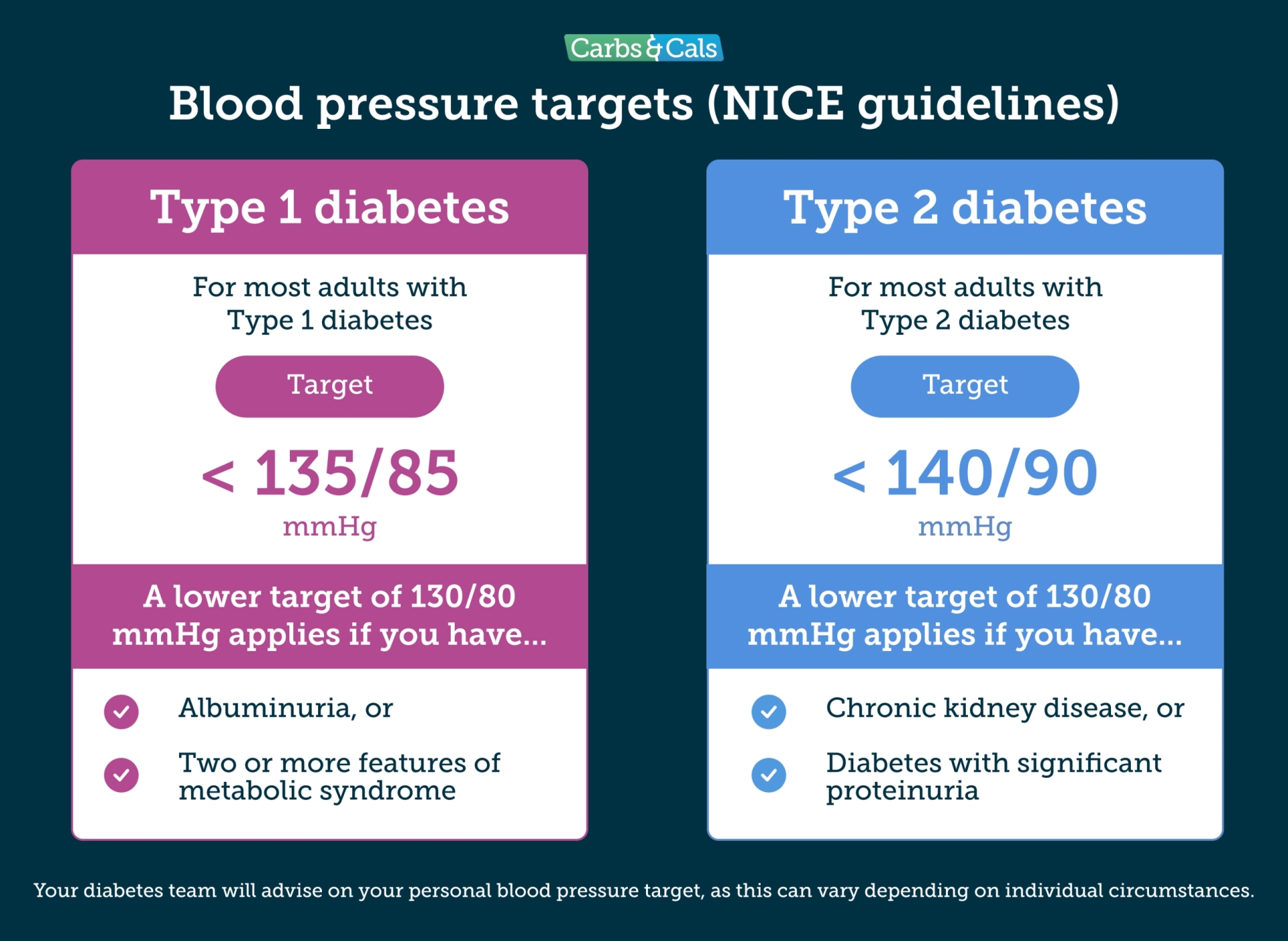
Blood pressure targets differ depending on whether you have type 1 or type 2 diabetes, and whether you have any complications such as kidney or eye disease. As a general guide:
- Type 2 diabetes: NICE recommends a clinic blood pressure target of below 140/90 mmHg for most adults. A lower target of below 130/80 mmHg applies if you also have chronic kidney disease and diabetes with significant proteinuria.
- Type 1 diabetes: NICE (NG17) recommends a target of 135/85 mmHg for most adults. A lower target of 130/80 mmHg applies if you have albuminuria or two or more features of metabolic syndrome.
Your diabetes team will advise on your personal blood pressure target, as this can vary depending on your individual circumstances.
How much salt should we be eating?
Salt is made up of sodium and chloride. It is the sodium that directly affects blood pressure, but food labels in the UK list both salt and sodium content, so it is worth knowing how they relate: 1g of sodium is equivalent to 2.5g of salt.
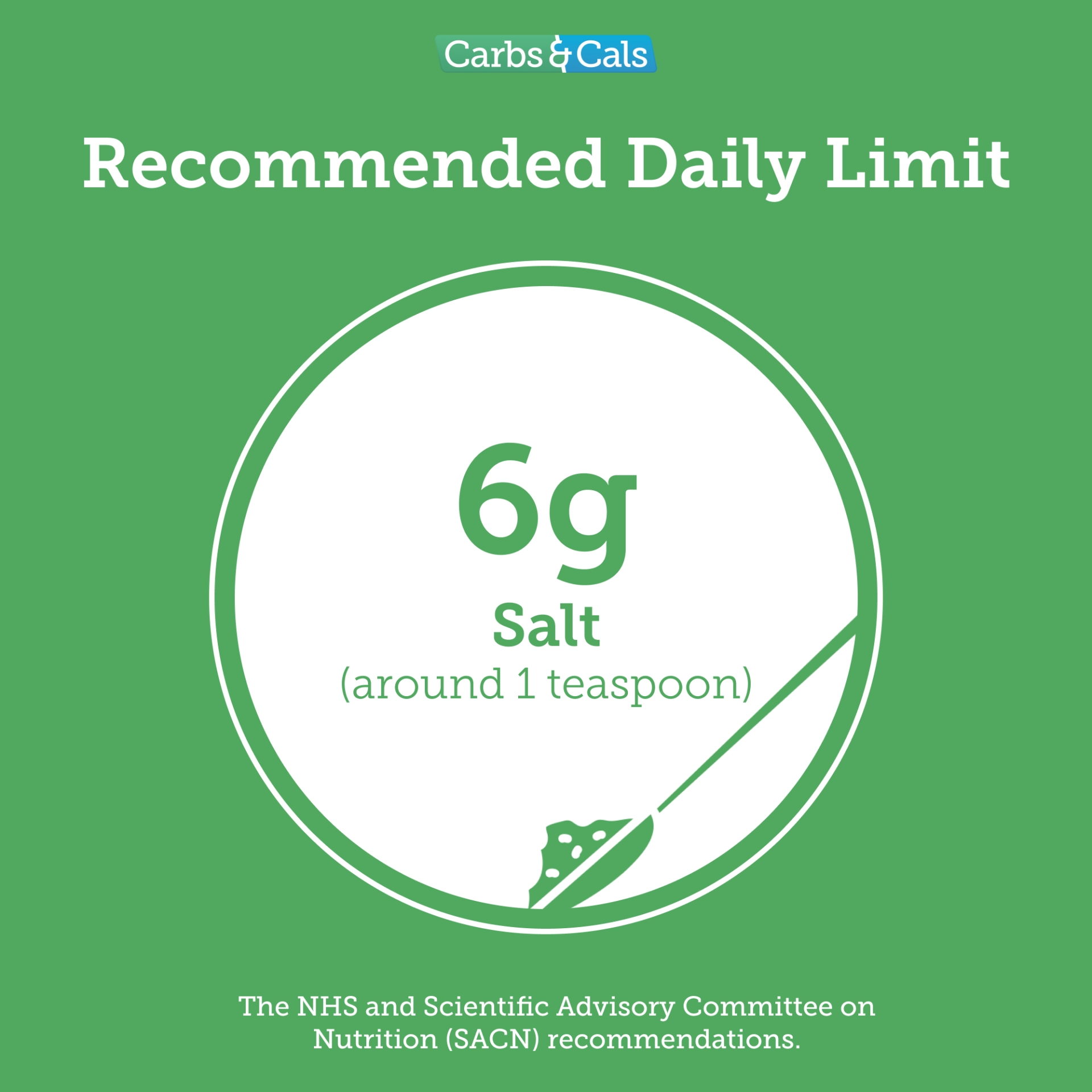
The NHS and Scientific Advisory Committee on Nutrition (SACN) recommend that adults should consume no more than 6g of salt per day (around one teaspoon). According to the 2018/19 National Diet and Nutrition Survey, the average adult in England consumes around 8.4g per day, well above this recommendation.
For people with diabetes and hypertension, reducing salt intake towards this 6g target is a key dietary goal. Research consistently shows that even modest reductions in salt intake can meaningfully lower blood pressure.
The evidence: Salt reduction and blood pressure
The relationship between dietary salt and blood pressure is well established. A Cochrane systematic review and meta-analysis by He, Li and MacGregor (updated 2021, CD004937), which included 34 randomised trials, found that reducing salt intake by an average of 4.4g per day was associated with a mean reduction in systolic blood pressure of around 4.2 mmHg across the study population. In people with hypertension specifically, the reduction was closer to 5.4 mmHg. Even modest reductions in blood pressure of this size are associated with meaningful reductions in cardiovascular risk at a population level.
For people with diabetes, salt reduction may be particularly beneficial. A randomised double-blind crossover trial by Suckling et al. (2016, published in Hypertension) specifically studied people with type 2 diabetes and impaired glucose tolerance. The trial found that a modest reduction in salt intake of around 2.9g per day led to a significant fall in blood pressure, as well as reductions in urinary albumin excretion, an important marker of kidney stress. This was the first and largest study of its kind in this patient group.
It is also worth noting that the kidneys play a central role in regulating blood pressure and sodium balance. Diabetic kidney disease, which affects a significant proportion of people with both type 1 and type 2 diabetes, can impair this regulation, making dietary salt intake even more relevant for this group.
Where does salt come from in our diet?
Many people assume that controlling salt intake simply means using the salt shaker less. In reality, around 75% of the salt we eat comes from processed and manufactured foods, not from salt added at the table or during cooking. This figure comes from the Food Standards Agency’s National Diet and Nutrition Survey data.
Some of the biggest contributors to salt intake in the UK diet include:
- Bread and bakery products
- Cereals and cereal bars
- Processed meats (bacon, ham, salami, sausages)
- Cheese
- Ready meals and convenience foods
- Sauces, condiments, and stock cubes
- Savoury snacks (crisps, crackers, pretzels)
- Tinned soups
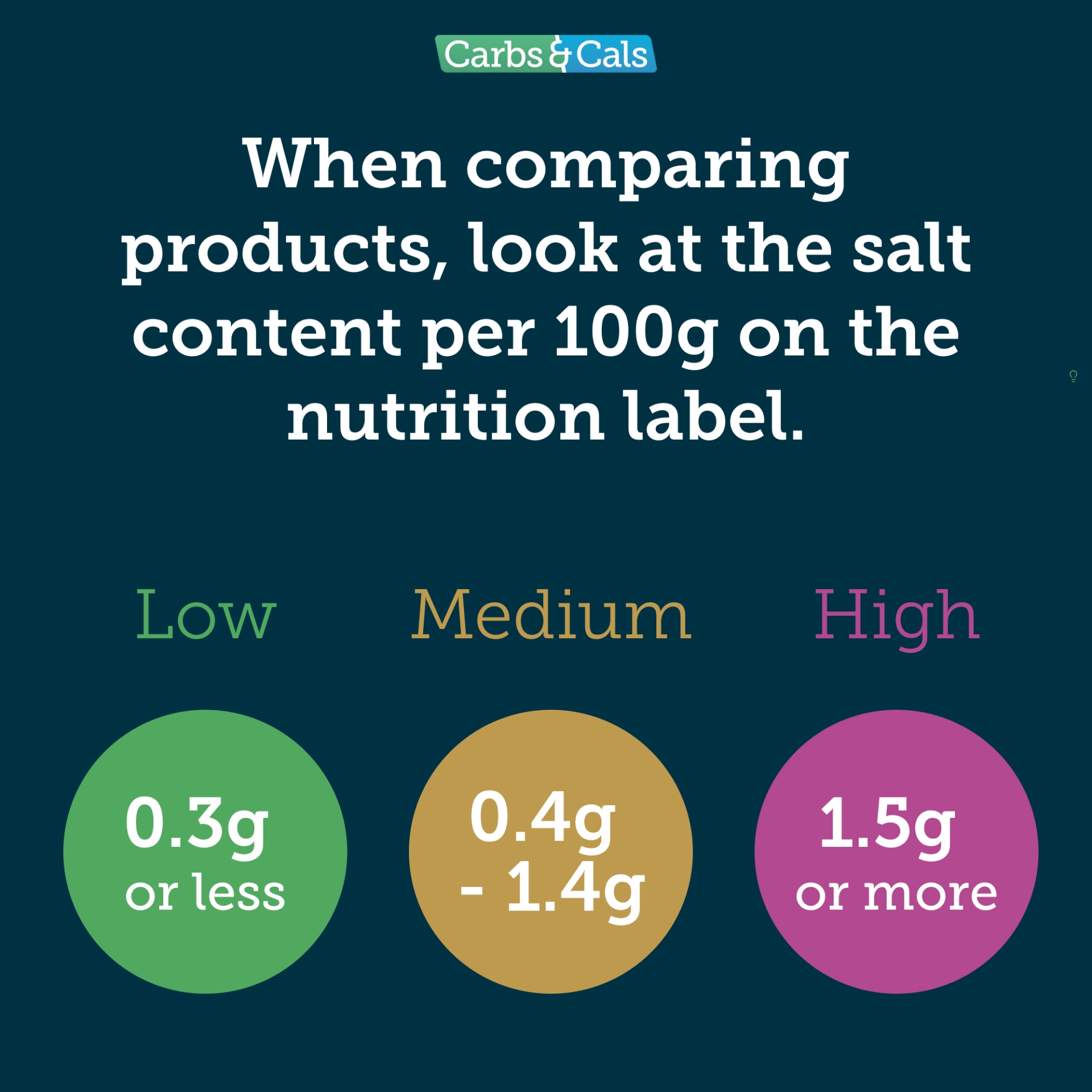
This is where reading food labels becomes especially helpful. When comparing products, look at the salt content per 100g on the nutrition label:
- High salt: more than 1.5g salt per 100g
- Low salt: 0.3g salt or less per 100g
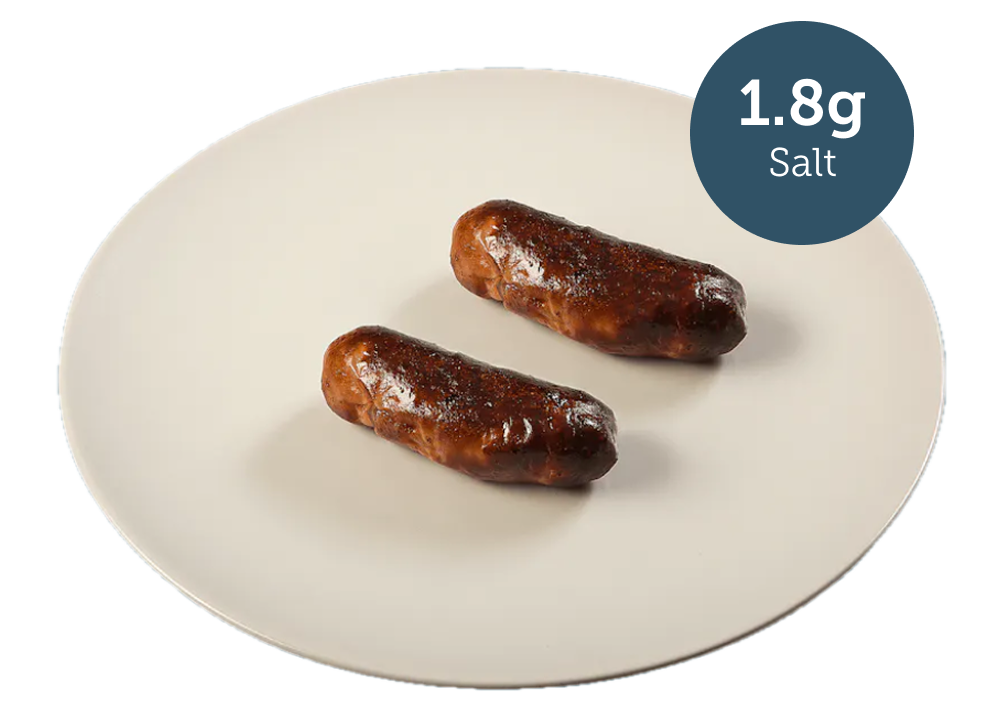
Sausage (grilled)
Weight = 110g
Salt = 1.8g
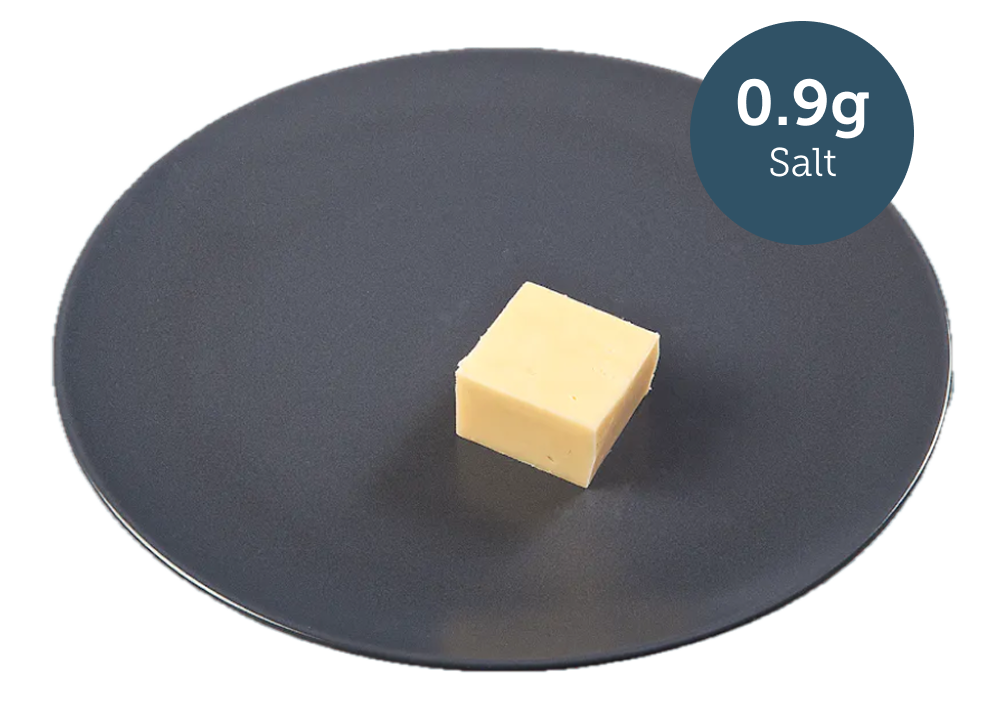
Cheddar
Weight = 50g
Salt = 0.9g
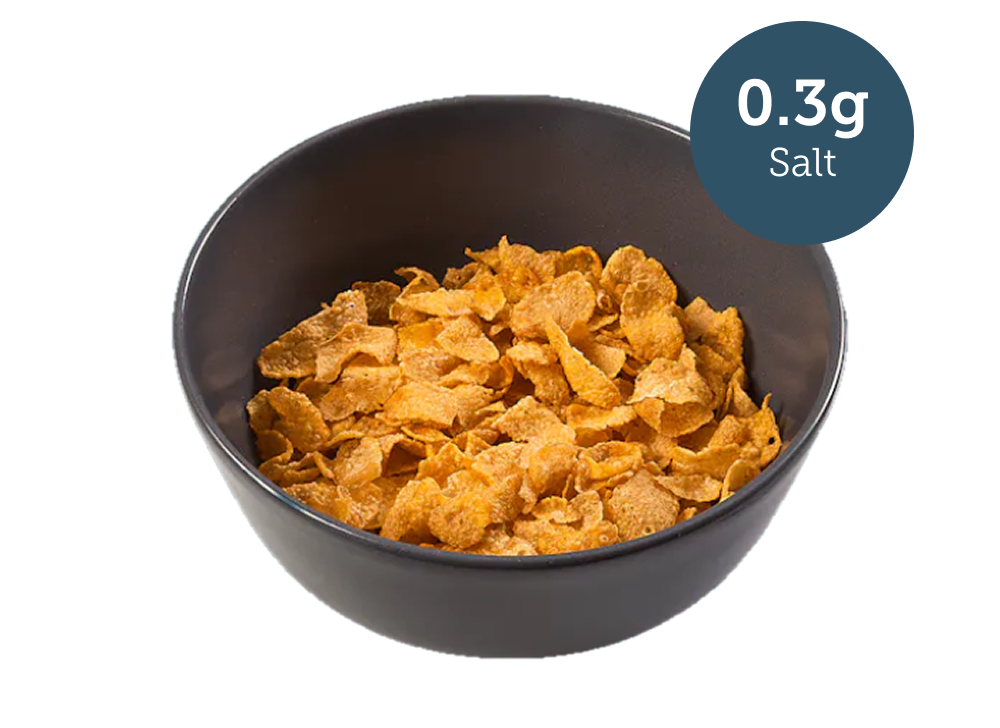
Corn Flakes
Weight = 30g
Salt = 0.3g
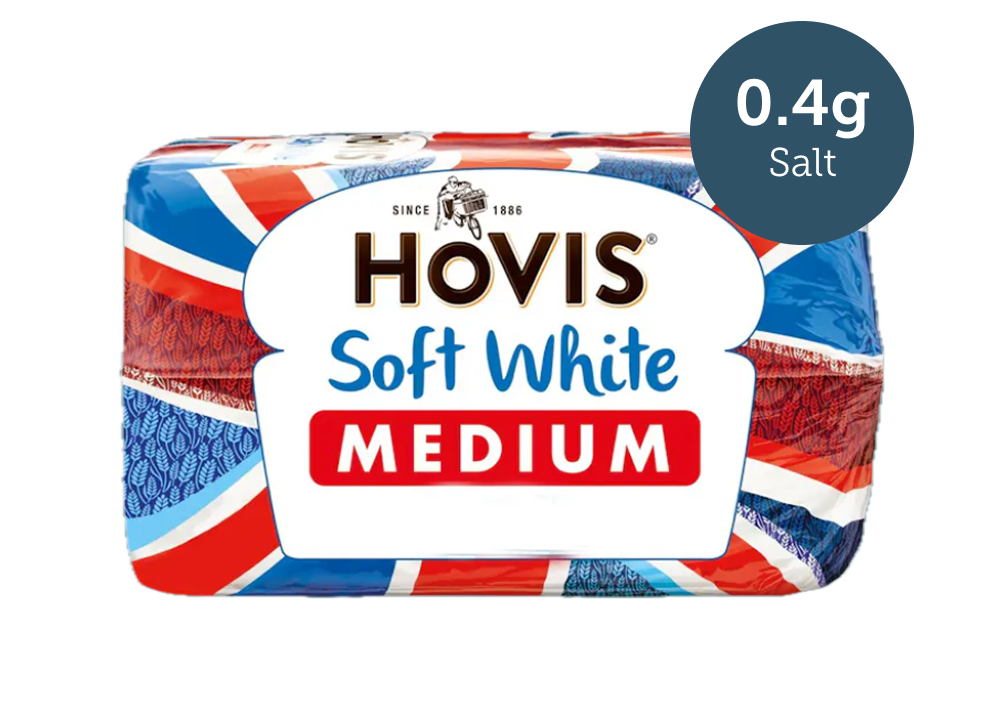
Hovis Soft White Bread
1 slice (medium)
Weight = 40g
Salt = 0.4g
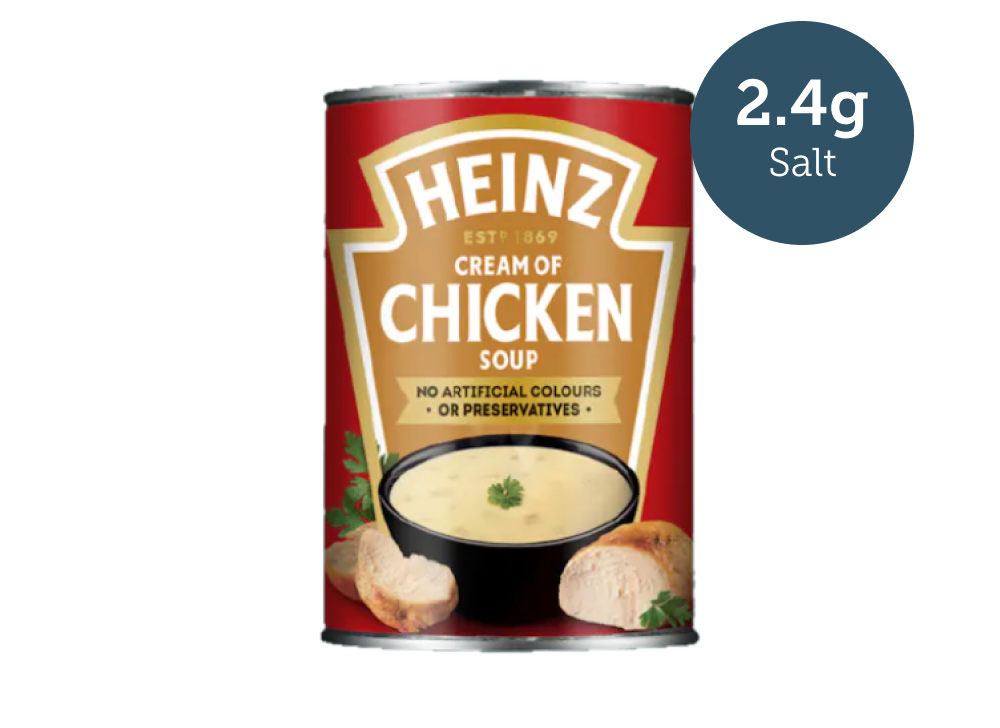
Heinz Cream of Chicken Soup
Standard tin
Weight =400g
Salt = 2.4g
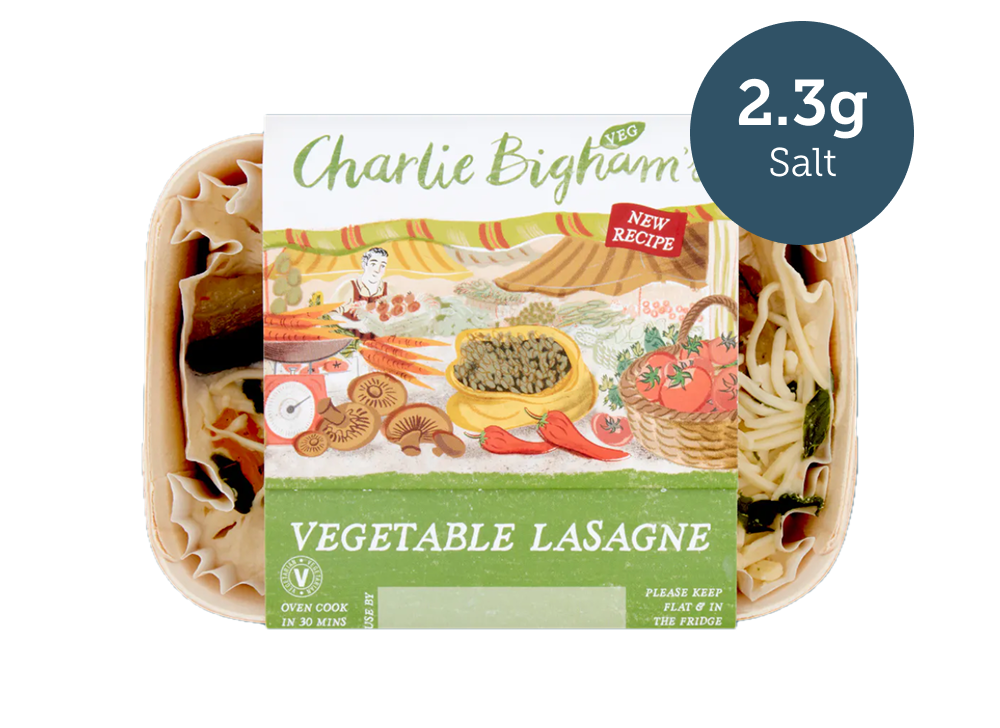
Charlie Bigham’s Vegetable Lasagne
Weight = 363g
Salt = 2.3g
Practical tips for reducing salt
Small, consistent changes to how you shop, cook, and eat can add up to a meaningful reduction in your daily salt intake:
- Choose reduced-salt versions of bread, tinned tomatoes, baked beans, and stock cubes
- Use herbs, spices, lemon juice, and vinegar to season food instead of salt
- Rinse tinned vegetables and pulses before use, which can reduce their salt content
- Compare labels when shopping and choose lower-salt options
- Cook from scratch where possible, as home-cooked meals tend to be much lower in salt than processed or restaurant food
- Limit processed meats such as bacon, ham, and sausages
- Go easy on high-salt condiments: soy sauce, for example, is particularly high in salt
Using Carbs & Cals to track salt
The Carbs & Cals app tracks salt content for thousands of foods and meals, making it straightforward to monitor your daily intake and spot high-salt items in your diet. You can use the food database to compare similar products and make lower-salt swaps.

Salt and diabetes medications
If you are taking medication for blood pressure alongside your diabetes treatment, reducing salt intake can complement the effect of your medication. Some people find that dietary changes support better blood pressure control, though any adjustments to medication should always be made in discussion with your GP or diabetes team.
It is also worth noting that some diabetes medications, including certain SGLT2 inhibitors, can affect fluid and electrolyte balance. If you have any concerns about how dietary changes might interact with your medication, speak to your pharmacist or healthcare team.

Beyond salt: Other dietary factors that affect blood pressure
While salt reduction is one of the most powerful dietary changes you can make for blood pressure, it works best as part of an overall healthy eating pattern. The DASH (Dietary Approaches to Stop Hypertension) diet, which has been well validated in clinical trials, including the original Appel et al. NEJM trial (1997), emphasises:
- Plenty of vegetables and fruit
- Wholegrains over refined carbohydrates
- Low-fat dairy foods
- Lean proteins, particularly oily fish, pulses, and nuts
- Limiting saturated fat, red and processed meat, and added sugars
These principles align well with general healthy eating advice for people with diabetes, making the DASH approach a practical framework for managing both blood glucose and blood pressure simultaneously.
Potassium is also worth mentioning. A diet rich in potassium, found in foods like vegetables, fruit, pulses, and dairy, can help lower blood pressure by counteracting some of the effects of sodium. Most people with diabetes can safely increase their potassium intake through food, though those with diabetic kidney disease should check with their healthcare team first, as managing potassium levels can become important when kidney function is impaired.
Alcohol and blood pressure
Alcohol can raise blood pressure, and many alcoholic drinks also contribute significant carbohydrates. The NHS recommends drinking no more than 14 units of alcohol per week, spread over at least three days, with some alcohol-free days each week.
Salt, blood pressure and diabetes: Key takeaways
If you have type 1 or type 2 diabetes, managing blood pressure is a vital part of reducing your risk of long-term complications. Reducing your salt intake to the NHS recommended maximum of 6g per day is one of the most effective dietary changes you can make.
In practice, this means:
- Asking your diabetes team about your personal blood pressure target and monitoring your readings
- Choosing lower-salt foods and reading nutrition labels for salt content per 100g
- Cooking from scratch where you can and seasoning with herbs and spices
- Eating a balanced diet rich in vegetables, fruit, wholegrains, and pulses
- Discussing any medication concerns or dietary changes with your diabetes team
As always, individual needs vary. A registered dietitian can help you develop a personalised eating plan that takes into account your blood glucose management, blood pressure, kidney function, and any other health considerations. You can find a registered dietitian through the British Dietetic Association’s Find a Dietitian directory.
References
NHS (2023). High blood pressure (hypertension).
NICE (2019). Hypertension in adults: diagnosis and management. NG136. National Institute for Health and Care Excellence.
NICE (2015, updated 2022). Type 1 diabetes in adults: diagnosis and management. NG17. National Institute for Health and Care Excellence.
He FJ, Li J, MacGregor GA. (2021). Effect of longer-term modest salt reduction on blood pressure. Cochrane Database of Systematic Reviews, Issue 11. Art. No.: CD004937.
Scientific Advisory Committee on Nutrition (SACN) (2003). Salt and Health. London: The Stationery Office.
NHS Digital / Public Health England (2020). National Diet and Nutrition Survey: Assessment of salt intake from urinary sodium in adults (2018/19).
Diabetes UK (2023). Cardiovascular disease and diabetes.
Appel LJ, et al. (1997). A clinical trial of the effects of dietary patterns on blood pressure (DASH trial). New England Journal of Medicine, 336(16), 1117-1124.
Suckling RJ, He FJ, Markandu ND, MacGregor GA. (2016). Modest salt reduction lowers blood pressure and albumin excretion in impaired glucose tolerance and type 2 diabetes mellitus: a randomized double-blind trial. Hypertension, 67(6), 1189-1195.
Action on Salt (2023). Salt and your health.

Want to keep an eye on your salt intake?
Track salt with the Carbs & Cals app
The Carbs & Cals app includes salt information for thousands of foods, meals, restaurant dishes, and branded products, helping you understand where salt comes from in your diet.
Use the Carbs & Cals app to:
- Track your daily salt intake.
- Compare foods and make lower-salt swaps.
- Monitor calories, carbohydrates, fibre, protein and more.
- Build balanced meals that support heart health.
- Understand portion sizes with food photos.
Designed and recommended by registered dietitians, Carbs & Cals helps you make informed food choices for diabetes, blood pressure management and overall health.
Download the app today and start making simple, heart-healthy food swaps.


Want to Learn More?
Grab a Copy of Carb & Calorie Counter
The multi-award-winning Carb & Calorie Counter book is your definitive, expert-approved guide to carb and calorie counting.
- Over 1700+ high-quality food photos
- Up to six portion sizes per food
- At-a-glance carbs and key nutrients
- The Original #1 Bestseller
With the “Carb-Counting Bible”, a single flick of the page is all you need to plan nutritious, carb-counted meals.
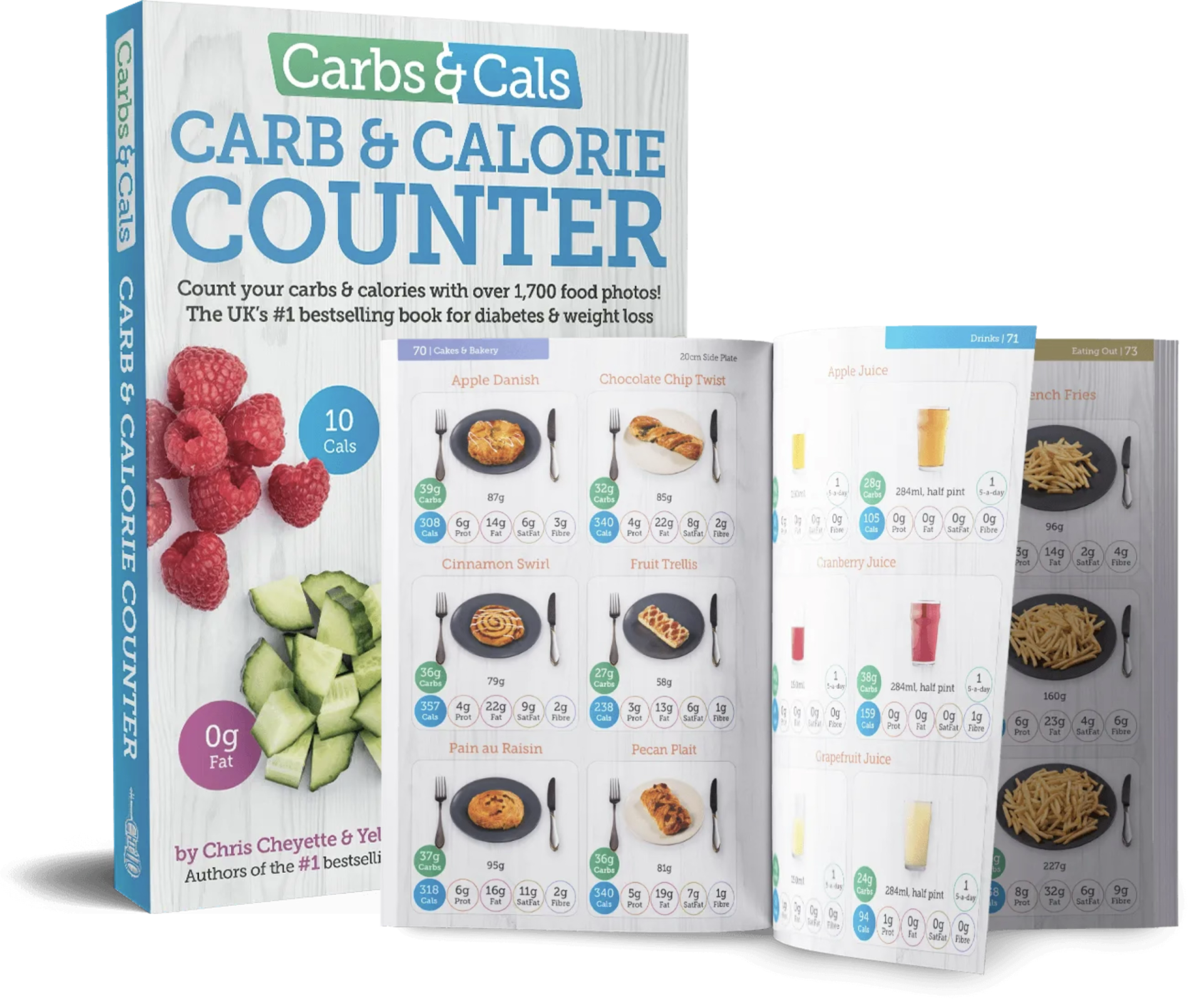
Contains hundreds of food photos that makes carb counting simple!
Sign up to the Carbs & Cals mailing list
Want to learn more about carb counting and the role of food in managing your health? Sign up to our mailing list!