If you live with diabetes in the UK, there is a good chance your vitamin D level is on the low side. Our sunshine is limited for much of the year, and many people with diabetes are older, spend more time indoors, or live with higher body weight, all of which make vitamin D deficiency more likely.
Vitamin D is best known for protecting bones, but it also has wider effects in the body, including possible links with blood glucose control. This article looks at what vitamin D does, how it connects with diabetes, which foods contain it, the best way to take supplements, and what happens if you do not get enough.
Contents
What does vitamin D do?
Vitamin D and diabetes control: What does the research say?
How much vitamin D do people in the UK need, and when should you take it?
Vitamin D and Type 1 diabetes
What foods contain vitamin D?
What does a lack of vitamin D cause?
Vitamin D and diabetes: Putting it all together
What does vitamin D do?
Vitamin D helps your body absorb calcium and phosphate from food. These minerals keep bones, teeth and muscles strong.
Vitamin D also acts a bit like a hormone. Cells in the pancreas, muscles and immune system have vitamin D receptors, and laboratory and human studies suggest that vitamin D may support insulin production and help the body use insulin more effectively.
This is why there is so much interest in its role in type 2 diabetes.
Vitamin D and diabetes control: What does the research say?
Large population studies show that people with lower vitamin D levels are more likely to develop type 2 diabetes in future. However, these studies cannot fully separate vitamin D from other factors such as higher body weight, less physical activity and less time outdoors, which are also risk factors for type 2 diabetes.
Randomised controlled trials give clearer answers. A major trial in people at high risk of type 2 diabetes found that vitamin D supplements did not significantly reduce the overall risk of developing diabetes, and similar large trials have reached the same conclusion, though combining results suggests at best a modest reduction in risk.
In people who already have type 2 diabetes, several meta analyses show small improvements in fasting glucose, HbA1c and insulin resistance, especially when people were clearly vitamin D deficient at the start and received higher doses for a limited time. The effect is helpful but not dramatic.
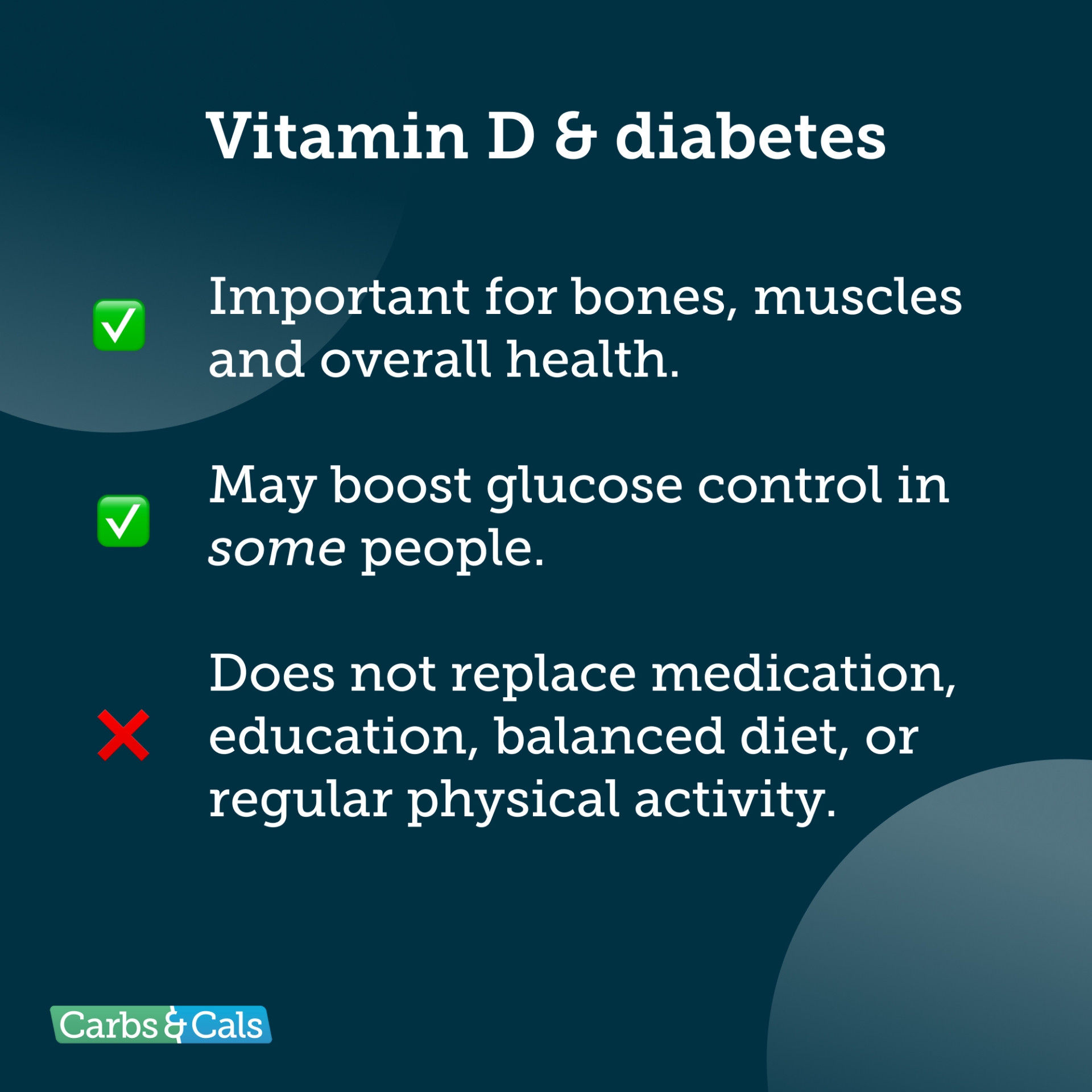
Taken together, experts agree on two main points. Correcting vitamin D deficiency is important for bones, muscles and overall health. It may give a small extra boost to glucose control in some people, but it does not replace diabetes medication, structured education, a balanced diet or regular physical activity. Always discuss any high dose supplement plan with your diabetes team or GP.
How much vitamin D do people in the UK need, and when should you take it?
Because UK sunlight is weak for much of the year, Public Health England and the NHS advise that everyone aged one year and over should consider taking a daily supplement of 10 micrograms of vitamin D, which is 400 international units (IU), from around October to early March. People who have very little sun exposure, live in a care home, cover most of their skin when outdoors, have darker skin, or are frail or housebound are advised to take 10 micrograms all year round.
Many people with diabetes fall into these higher risk groups. People with chronic kidney disease or other long term conditions should always follow advice from their specialist team before starting supplements.
For most adults, doses between 10 and 25 micrograms a day, 400IU to 1000IU, are commonly used for maintenance and can be bought over the counter. Higher doses may be prescribed for a short time if a blood test shows deficiency, but these should only be taken under medical supervision. The safe upper limit for long term intake in adults is 100 micrograms a day (4000iU). Taking more than this over many months can cause high calcium levels in the blood and may damage the kidneys and heart.
Vitamin D is fat soluble, so it is better absorbed when taken with food that contains some fat, such as milk or yoghurt, cheese, olive oil, nuts and seeds, eggs, or a meal that includes meat or fish. Clinical studies show that taking vitamin D with a meal containing fat increases absorption compared with taking it with a fat free meal. If you take diabetes medicines you can usually take vitamin D at the same time, though people with kidney disease or very complex treatment should check with their pharmacist or doctor.
Vitamin D and Type 1 diabetes
People with type 1 diabetes are more likely to have low vitamin D levels, especially at diagnosis. Studies suggest that deficiency may be linked with a higher risk of developing type 1 diabetes, but supplements have not been shown to prevent it. In those already living with type 1 diabetes, correcting deficiency may offer small benefits such as improved immune markers or slightly lower insulin needs, but results are mixed.
At present, NHS guidance is the same as for the general population: aim to avoid deficiency and consider a daily 10 microgram supplement, especially in autumn and winter.
What foods contain vitamin D?
In the UK, most vitamin D in spring and summer comes from sunlight on the skin, but food and supplements become more important in autumn and winter.
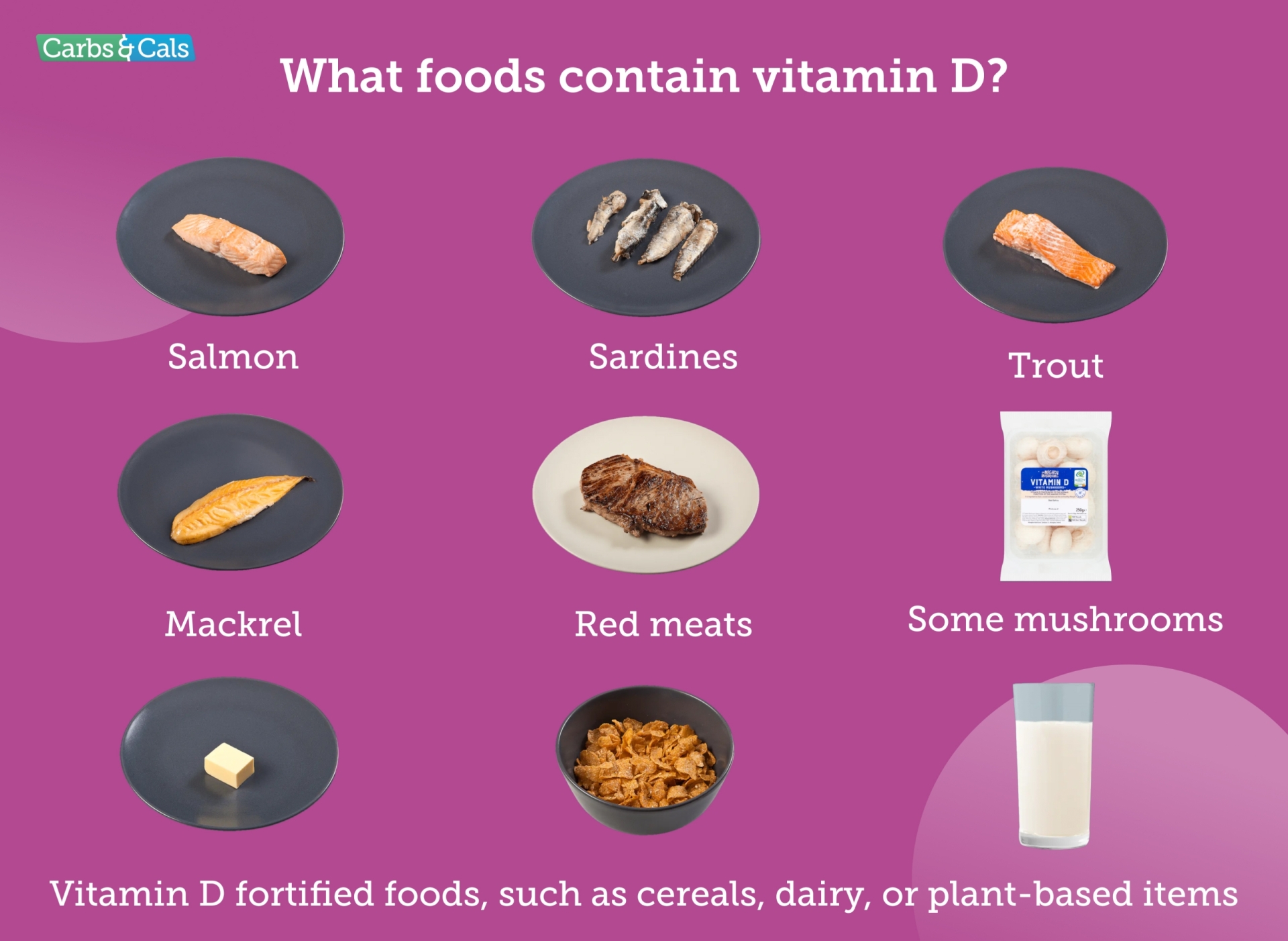
Foods that naturally contain vitamin D include oily fish such as salmon, sardines, mackerel, trout and herring, egg yolks, red meat and liver. Liver is not suitable in pregnancy because it is very high in vitamin A.
Some foods have vitamin D added. These include some fat spreads, breakfast cereals, certain yoghurts, and some dairy and plant-based drinks such as soya or oat drinks. Mushrooms grown under ultraviolet light can also provide useful amounts and may be labelled as high in vitamin D.
Unlike in some other countries, cow’s milk in the UK is generally not fortified with vitamin D, so it is not a reliable source. Even with a healthy diet, it is difficult to reach 10 micrograms a day from food alone, which is why low-dose supplements are widely recommended.
What does lack of vitamin D cause?
A long term lack of vitamin D makes it harder for the body to absorb calcium from food. Over time, this leads to soft, weak bones. In children, severe deficiency can cause rickets, which leads to bone deformities and delayed growth. In adults, it causes a condition called osteomalacia, which can lead to bone pain, muscle weakness and a higher risk of fractures and falls.
Milder deficiency is very common in the UK and often has no clear symptoms. Some people report tiredness, general aches and pains or low mood, but all of these symptoms can have many other causes, including poorly controlled diabetes. A blood test is needed to confirm low vitamin D levels.
For people living with diabetes, weak bones and muscle weakness add to the risk of falls and fractures, which are already more common in diabetes. Vitamin D deficiency is also linked to reduced muscle strength and slower recovery after illness. Correcting deficiency, together with good blood glucose control, a balanced diet that includes enough calcium, and regular weight bearing activity such as walking, can help protect your bones and muscles in the long term.
Vitamin D and diabetes: Putting it all together
Vitamin D is easy to overlook and fairly simple to put right. You can:
- Spend short, safe periods in the sun during spring and summer, while protecting your skin from burning.
- Include vitamin D rich foods in your weekly meal plan, such as oily fish once or twice a week, eggs and fortified foods.
- Consider a daily supplement of 10 micrograms (400IU) of vitamin D from October to March, or all year if you have higher risk factors, unless your doctor advises otherwise, and ask about a blood test if you have bone pain, muscle weakness, frequent falls or other risk factors for deficiency.
Keeping your vitamin D topped up is a small step that can support your overall health, energy and independence.

Want to Count Carbs on the Go?
Download the Carbs & Cals Mobile App
The award-winning Carbs & Cals mobile app is the only diet-tracking app that features food and drink photos.
- Search 272,000+ food & drink photos.
- Scan barcodes, snap labels or take a picture of the food on your plate with the Unified Food Scanner.
- Log meals and snacks with accurate carb and calorie info.
- Customise your nutrient view to focus on what matters most.
- Track your nutrients and set goals to stay on track.
At home or on the go, the Carbs & Cals app lets you count carbs and enjoy your food with confidence.


Want to Learn More?
Grab a Copy of Carb & Calorie Counter
The multi-award-winning Carb & Calorie Counter book is your definitive, expert-approved guide to carb and calorie counting.
- Over 1700+ high-quality food photos
- Up to six portion sizes per food
- At-a-glance carbs and key nutrients
- The Original #1 Bestseller
With the “Carb-Counting Bible”, a single flick of the page is all you need to plan nutritious, carb-counted meals.

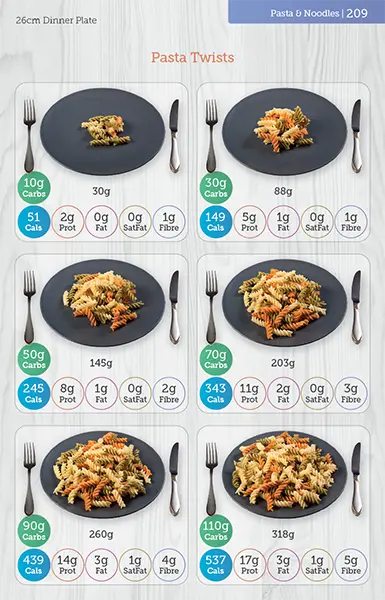
Contains hundreds of food photos that makes carb counting easy!
Sign up to the Carbs & Cals mailing list
Want to learn more about carb counting and the role of food in managing your health? Sign up to our mailing list!